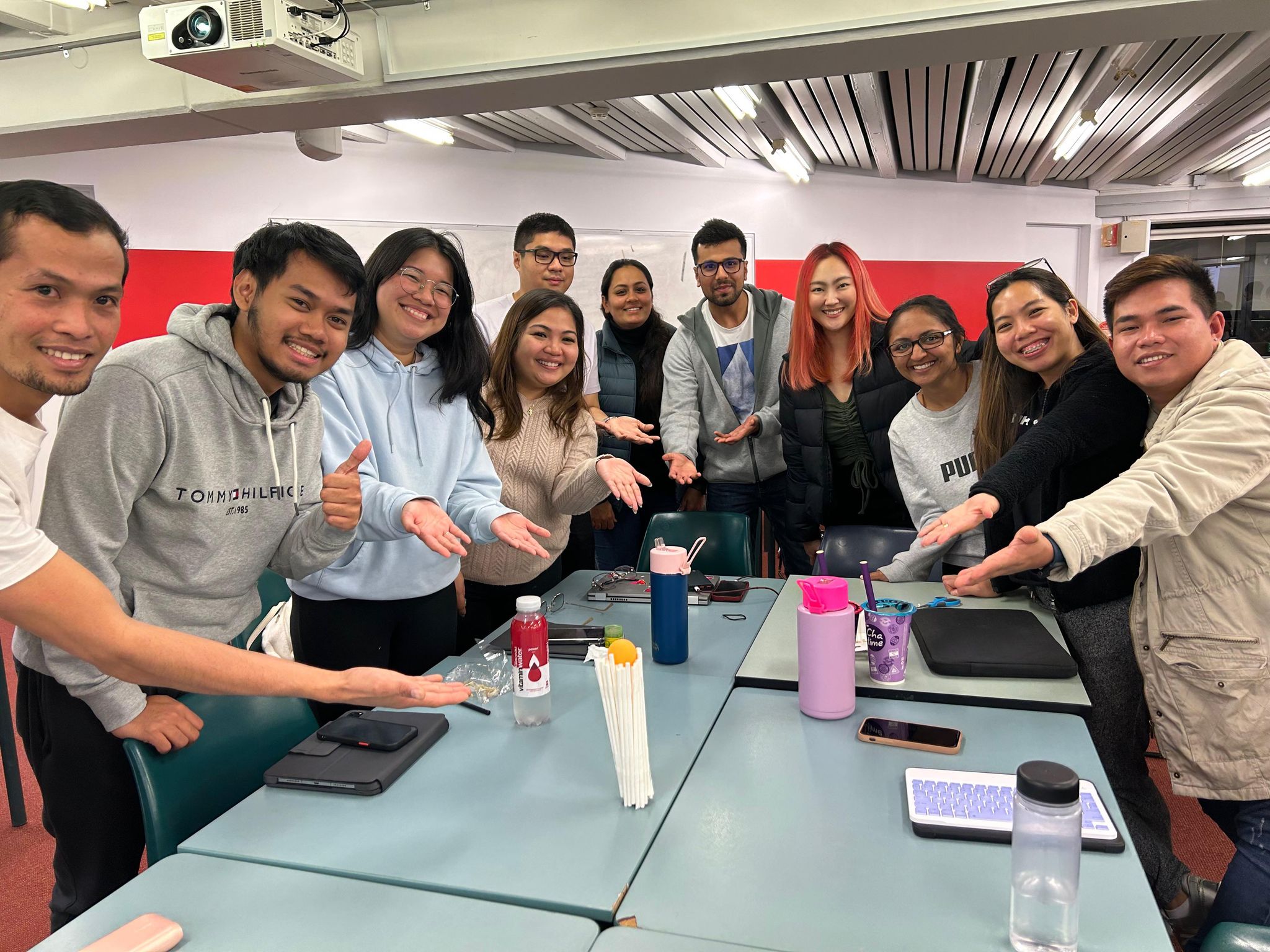
During the global pandemic, both front liners and corporate workers experience significant stress and anxiety as they navigate on how to effectively fulfil their roles amidst the crisis. In such circumstances, teamwork plays a vital role by providing a support system (Newman & Ford, 2020). Team members can offer emotional support and alleviate feelings of isolation— contributing to the overall well-being and resilience of team members (Newman & Ford, 2020). Consequently, effective communication among team members became more crucial in facilitating role clarifications to each team member, alignment of individual goals with the team's objectives and the timely sharing of critical information which would result in increased employee engagement and improved team performance. Moreover, open communication instigates inclusive decision-making (Newman & Ford, 2020). Therefore, video conferencing applications emerged as a valuable productivity tool during and after the global pandemic— promoting increased collaboration and efficiency within teams (Peek, 2016).
In the post-COVID environment, cross-functional team collaboration has emerged as a strategic advantage for organisations. By harnessing diverse expertise from different departments, it stimulates creativity and innovation, leading to unique solutions and driving the team’s success (Nanda et al., 2021). Moreover, shared leadership was developed; strengthening team’s cohesiveness and enhancing interpersonal relationships among team members which became a key factor in employee engagement (Newman & Ford, 2020). Thus, team members develop specific leadership roles and responsibilities, contributing to the achievement of the team’s goals (Newman & Ford, 2020).
.png)
Teams before were simply defined as a group of different people working together and maximising their efficiency to reach a common goal which have long been a foundation of today’s established and successful businesses (Magloff, 2019). However, today’s role of businesses is now founded in cross-functional collaboration, as it results in synergy in teams brought about by the diversification of skill-sets and backgrounds (Peek, 2016). Moreover, it helps organisations to adapt to the ever-evolving changes and demands in the business market (Peek, 2016).
Teamwork empowers employees to take accountability in the decision-making process which leads to improved morale, a more rewarding work environment and lower turnover in the organisation (Magloff, 2019). Furthermore, the healthy work environment and positive culture will further empower team collaboration (Peek, 2016). Hence, a friendly workplace encourages positive competition that increases the quality of work and motivates employees to stay committed in the organisation (Peek, 2016). In return, it cuts down the middle management of organisations leading to lower overhead costs for businesses (Peek, 2016). Thus, companies nowadays continuously add value to its success while saving money and improving the overall performance of the company in the form of eliminating overproduction and overhiring (Peek, 2016).
A positive team dynamic is easily recognizable when they are functioning effectively which shows in the overall group performance (DeakinCo., 2022). Hence, a successful team dynamic is characterised by accountability and productivity as members collaborate towards making collective decisions (DeakinCo., 2022). Moreover, trust and active listening among team members are evident, leading to a sense of mutual understanding and self-corrective behaviour (DeakinCo., 2022). Consequently, healthy team dynamics involve constructive response to feedback, aiming to enhance future decision-making processes (DeakinCo., 2022).
It is important to acknowledge that achieving exceptional team dynamics, particularly in the context of increased reliance on collaboration skills in the workplace during and after the COVID era, may not always be within direct control. Transitioning to virtual teams was a struggle for organisations who were not familiarised with the remote setup (Newman & Ford, 2020). This resulted in low levels of employee engagement due to the decreasing trend of interactions among team members amidst the digitalisation of communication (Newman & Ford, 2020). Also, this leads employees to become more task-oriented and less people-oriented due to the performance metrics set by companies to monitor employee performance and team dynamics towards achieving organisational goals (Newman & Ford, 2020). Hence, a group should emphasise training in the key elements of teamwork, such as effective communication, goal-setting, mutual trust, support and shared leadership (DeakinCo., 2022). By cultivating these aspects, a positive and productive working environment can be fostered.
In summary, the “new normal” has had a profound impact on how organisations approach teamwork and collaboration. They have encountered challenges in effectively managing employees and rebuilding collaboration in virtual team environments, as well as ensuring successful team dynamics. The sense of isolation and alienation during the COVID-19 pandemic underscored the importance of emotional support within teams, contributing to the well-being of team members. As the world moves beyond the pandemic, there is a heightened emphasis on effective communication and cross-functional collaboration, which have brought synergy to teams and contributed to the success of businesses. Therefore, the increasing popularity of virtual teamwork has presented unique challenges related to remote collaboration, virtual communication, and maintaining team cohesiveness.

DeakinCo. (2022, October 8). 6 strategies for managing and improving team dynamics - DeakinCo. Https://Deakinco.com/; DeakinCo. https://deakinco.com/resource/6-strategies-
for-managing-and-improving-team-dynamics/
Magloff, L. (2019, February 4). What are the benefits of teamwork in business? Https://Smallbusiness.chron.com/; Hearst Newspaper. https://smallbusiness.chron.com/advantages-group-work-teamwork-
24031.html
Nanda, R., Phillips, A. N., & Kane, G. C. (2021, October 26). Teaming your way through disruption. Deloitte Insights; Deloitte. https://www2.deloitte.com/xe/en/insights/topics/strategy/cross-
functional-collaboration.html
Newman, S. A., & Ford, R. C. (2020). Five steps to leading your team in the virtual COVID-
19 workplace. Organizational Dynamics, 50(1), 100802. Science Direct: Elsevier. https://doi.org/10.1016/j.orgdyn.2020.100802
Peek, S. (2016, August 2). 5 reasons why teamwork is crucial to workplace success. Business.com; business.com. https://www.business.com/articles/5-reasons-why-teamwork-is-crucial-to-
workplace-success/
